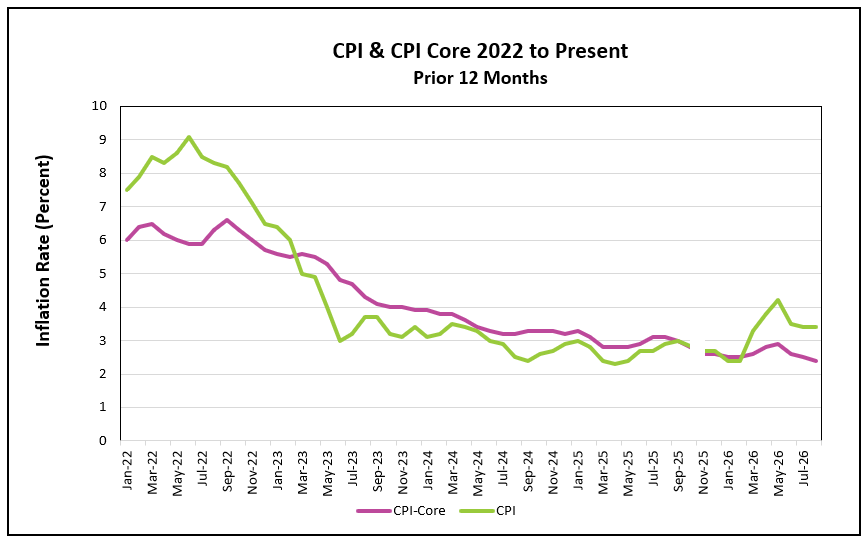
The inflation figures from the Bureau of Labor Statistics (BLS) Press Release: Consumer Price Index (CPI) – August 2026.
Inflation showed few signs of abating in August, increasing the likelihood that Federal Reserve policymakers will raise their benchmark interest rate when they meet Tuesday and Wednesday. The Consumer Price Index increased 0.4% during the month, up from a 0.1% rise in July.
Gasoline prices surged 3.9%, accounting for more than one-third of the monthly increase. Gasoline now costs more than 27% above its level a year ago, while fuel oil—used to heat many homes—is 52% more expensive just as cooler weather approaches.
And the worst may yet be to come. The latest gasoline data do not fully capture the emerging risks to energy prices. The index was calculated before Saudi Arabia shut down a major pipeline following a drone attack last week. The war and repeated strikes by Yemen’s Houthi militants have also pushed Saudi oil production to its lowest level in more than three decades.
Oil prices have already risen sharply in September, and diesel has surged above $6 per gallon. Because diesel fuels the trucks that move goods across the country, these higher transportation costs are likely to ripple through the economy as vendors pass them on to consumers. The full impact of these disruptions has not yet appeared in official inflation data — and may intensify in the months ahead.
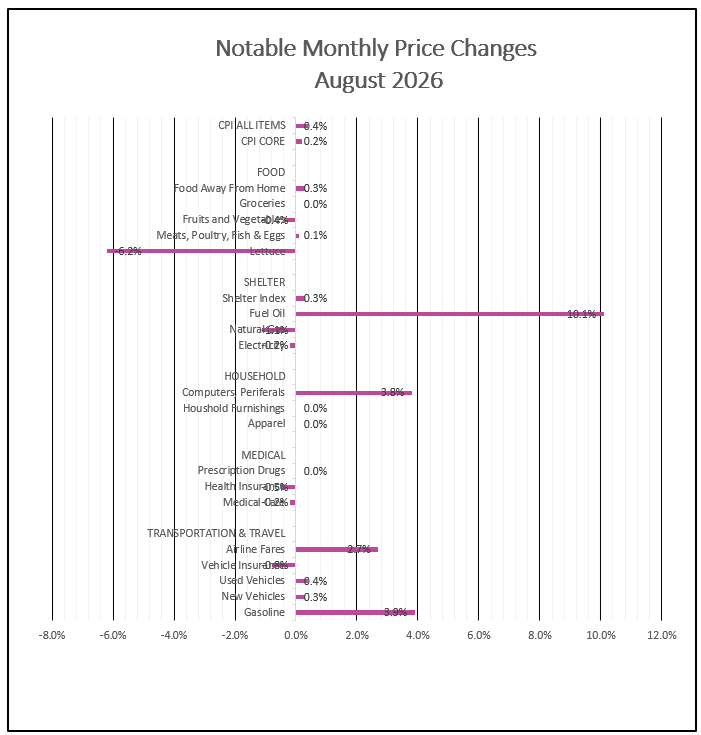
Food prices offered mixed news. Grocery prices rose 0.1% in August and are up 2.2% over the past year, while eating out became 0.3% more expensive, with restaurant prices increasing 3.4% over the past 12 months.
Economists often focus on core inflation, which excludes volatile food and energy categories, to gauge underlying trends. The 12‑month core CPI continued its gradual decline, slipping by one‑eighth of a percentage point to 2.4%. Still, the monthly core measure accelerated from 0.2% to 0.3%, and the shelter index rose 0.3%, marking its first increase since April.
Technology prices provided another example of uneven inflation. Surging demand for artificial intelligence tools pushed prices for computer software and accessories up 25.4% over the past year, while computers, peripherals, and smart‑home assistants rose 8.4%.
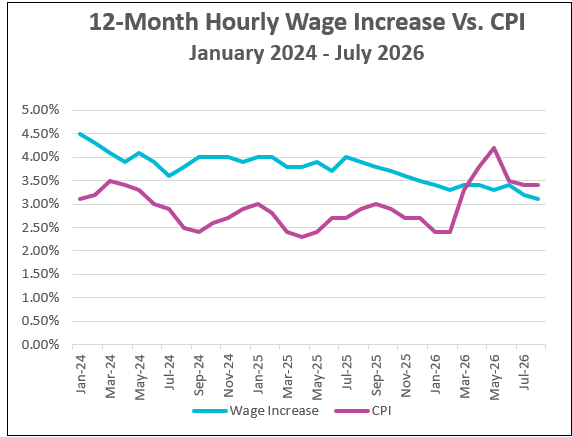
August also marked the fifth consecutive month in which 12-month CPI growth exceeded average hourly wage gains. When workers’ compensation fails to keep pace with inflation, employees experience a decline in their real purchasing power even if their paychecks are larger in dollar terms. For example, a 3% raise provides no meaningful improvement if consumer prices rise by 4%; workers effectively lose 1% of their buying power. Families may respond by reducing spending on discretionary items, postponing major purchases, or relying more heavily on credit cards and other forms of debt to cover everyday expenses. Lower-income households are especially vulnerable because a larger share of their income goes toward necessities such as housing, food, transportation, and energy, and these sectors have had some of the largest price increases.
Consumers are already showing greater concern about the economy. The University of Michigan’s Consumer Sentiment Index fell for the second consecutive month and is now 13% lower than it was a year ago. With energy prices climbing, producer costs accelerating, and inflation still exceeding wage growth, households may have good reason to remain cautious.
A separate report offered further cause for concern. The producer price index (PPI) for final demand rose 0.4% in August, its fastest increase since May. Because the PPI tracks the prices producers pay for goods and services, economists view it as a leading indicator of consumer inflation; higher production costs often filter into the final prices paid by households.
Tariffs against many of the US trading partners earlier in the year precipitated inflation. During the past few months, the impact of the tariffs has dissipated. However, President Trump’s renewed trade war and higher tariffs on imports from Canada could increase the price of many Canadian imports.
President Trump’s proposal to provide a $5,000 payment to every adult if Republicans gain control of both chambers of Congress after the midterm elections could significantly boost aggregate demand and potentially add to inflationary pressures, much like President Biden’s final stimulus at the end of his term.
The report likely did little to convince Federal Reserve officials that inflation is moving decisively toward the central bank’s 2% target. Inflation has remained above that benchmark for five years. Policymakers are growing impatient. At their last meeting, three policymakers dissented in favor of raising rates. Economists warn that the longer inflation stays elevated, the more deeply it can become embedded in inflation expectations among consumers and businesses.
Taken together, August’s data present a difficult environment for policymakers and households alike. Rising energy and transportation costs threaten to push prices higher in the months ahead, while persistent core inflation signals that underlying pressures have not significantly eased. The Federal Reserve will likely raise its benchmark rate this week—and raise it further in the coming months—even as consumer sentiment weakens and economic anxiety grows. Until inflation moves convincingly toward the 2% target and real wage growth begins to outpace prices, households and businesses are likely to continue facing a strained economic landscape.