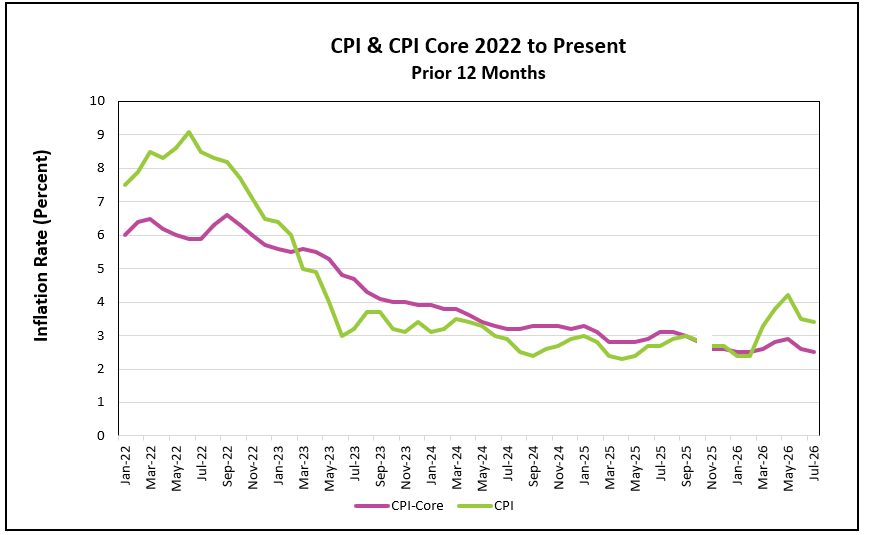
The inflation figures from the Bureau of Labor Statistics (BLS) Press Release: Consumer Price Index (CPI) – July 2026.
The latest inflation report offers a mixed picture: price pressures are continuing to cool, but many families are still struggling to keep up with the cost of living. Both the all-inclusive Consumer Price Index (CPI) and the core CPI fell by 0.1% over the past 12 months, extending the downward trend in inflation. Even so, inflation remains above its pre-war level of 2.4%, indicating that prices are still elevated relative to their pre-war level.
One encouraging sign is that the 12-month core index matched a five-year low, suggesting that underlying inflation is gradually softening. Everyday essentials also became somewhat less expensive. Prices for food, gasoline, and automobile insurance drifted lower, helping ease pressure on household budgets.
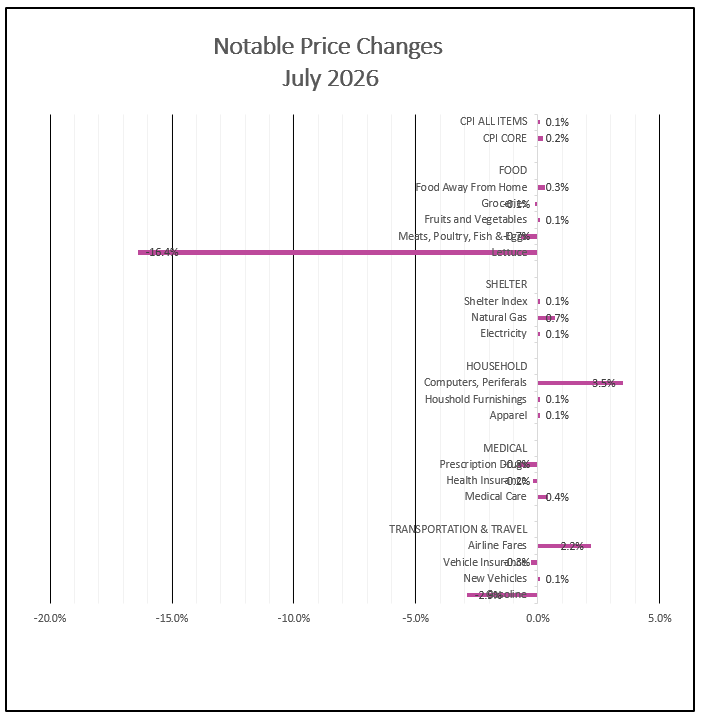
Grocery prices fell for the first time since March, with meat prices dropping 0.7%, giving some relief to shoppers. Food prices overall rose only 0.1% in July, though they were still 3.0% higher than a year earlier. A sharp 16.4% plunge in lettuce prices, tied to a cyclospora parasite outbreak, helped hold down the food index.
Gasoline prices also fell nearly 3% in July, although they remained almost 25% above their level from a year ago. Early-month optimism about a negotiated reopening of the Strait of Hormuz helped push prices lower, but that relief proved temporary. Much of the CPI data was collected before those negotiations collapsed and energy prices began rising again. According to AAA, the national average for gasoline was $4.09 on August 19, about 21 cents higher than a month earlier. If gas prices continue to climb, they could reverse some of the recent progress on inflation.
Shelter, Medical Costs, and the AI Boom Remain Important Drivers
Shelter remained a major force in the CPI. A modest 0.1% increase in shelter helped restrain overall inflation, with the shelter category still accounting for roughly two-thirds of the increase in the all-inclusive CPI. Within the shelter category, the cost of owning and renting a home rose by 0.3%. Hotel rates fell 2.8%, likely reflecting weaker demand following the World Cup Tournament.
Healthcare expenses also moved higher. Hospital stays, physician services, and prescription drugs all increased significantly, meaning many people seeking medical care likely paid more in July than they did in June.
The ongoing AI boom was visible in the inflation data as well. Prices for computers and peripherals rose 3.5% in July, reflecting both higher production costs and stronger demand for more advanced chips used in AI-powered devices.
While inflation is easing, many families are not feeling relief in their day-to-day finances. Income has failed to keep pace with inflation since April, making it harder for low-income households to pay bills and cover basic expenses. As a result, families have increasingly relied on borrowing and savings to get by.
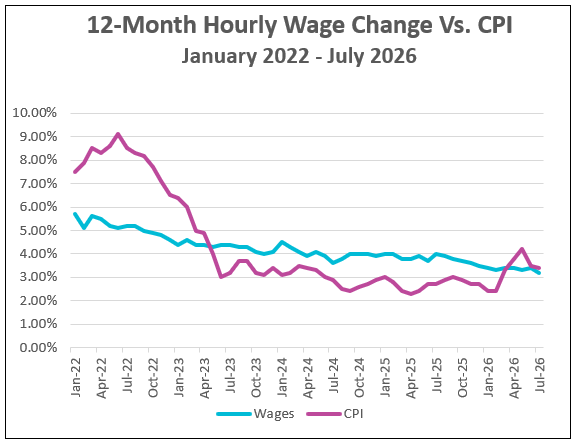
That strain is showing up in the data. Delinquencies on consumer loans are now near their highest point in twelve years (FRED Delinquencies). At the same time, the personal savings rate has fallen to its lowest level in twelve months (FRED Savings). Together, these trends suggest households are becoming more financially stretched, even as inflation cools.
The current CPI report is unlikely to persuade the Federal Reserve to raise interest rates at its September meeting. Inflation is trending downward, and the 12-month core index has reached a five-year low. On top of that, the unemployment rate has remained stable, and payroll growth has been modest, which gives policymakers who prefer to hold rates steady plenty of support.
Still, inflation has not yet returned to the Fed’s 2% target, so the argument for tighter policy has not disappeared. Rising energy prices and continuing geopolitical tensions, including the closure of the Strait of Hormuz, could add new inflationary pressure in the months ahead.
The Fed will have more information before its September meeting, including the August CPI report and its preferred inflation gauge, the PCE price index. Those releases will likely carry more weight in the decision-making process than this month’s CPI alone.
The next major update will come with the PCE inflation report, set for release on August 26. Higher Rock will publish its summary and analysis shortly after the report is released. For now, the big takeaway is clear: inflation is cooling, but the financial pressure on households remains very real. Lower prices for some essentials are welcome, but higher borrowing, falling savings, and rising delinquencies show that many families are still feeling squeezed.