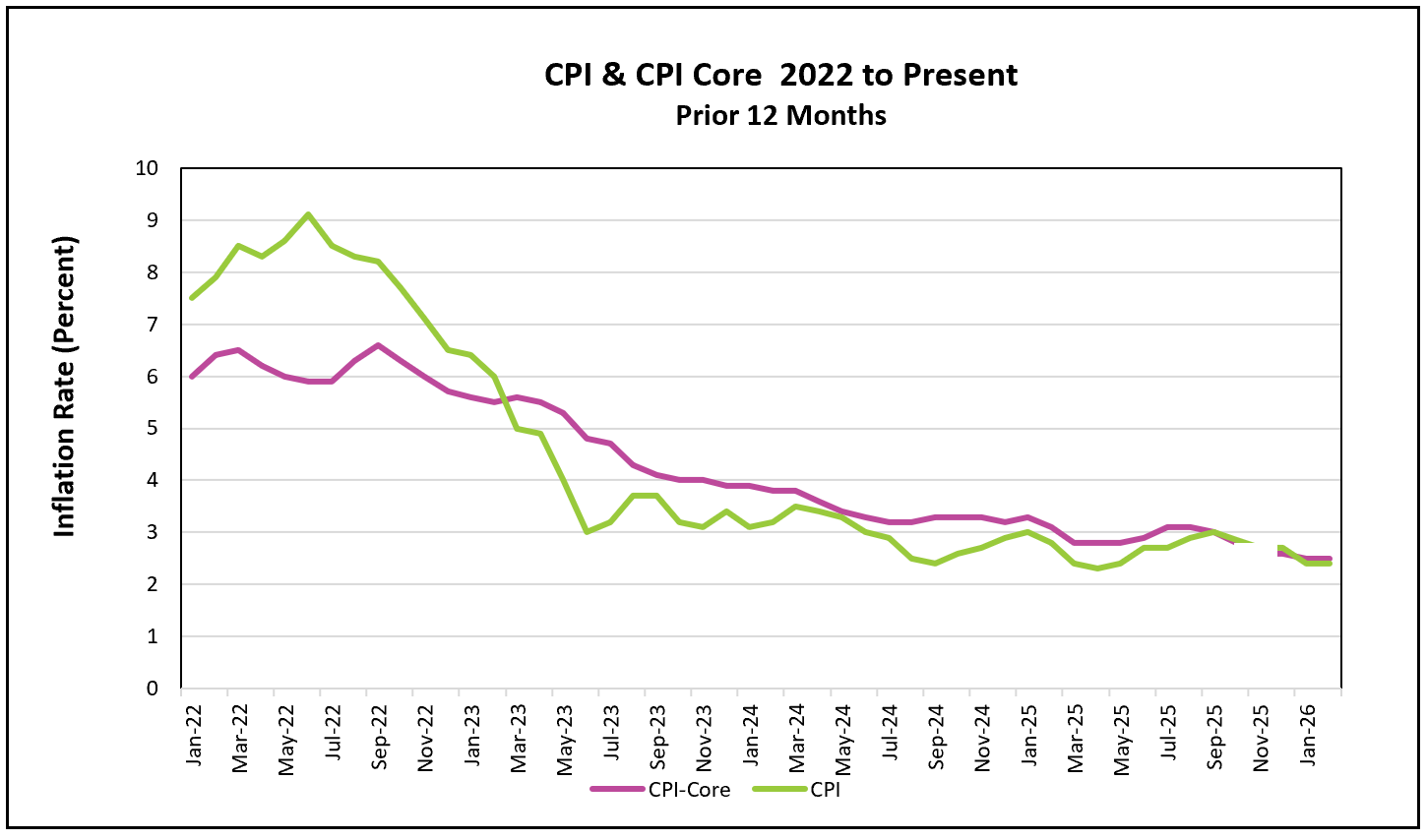
The inflation figures from the Bureau of Labor Statistics (BLS) Press Release: Consumer Price Index (CPI) – February 2026.
Inflation showed little overall change in February compared with January, offering some encouraging signs that price pressures may be stabilizing. The 12-month core consumer price index (CPI), which excludes the volatile food and energy categories, rose 2.5%, matching its slowest pace since 2021. A continued deceleration in shelter costs played a major role in restraining inflation. Housing expenses have moderated for several months, with the rent index rising only 0.1% in February—the smallest increase in five years. Because shelter accounts for a large share of the CPI, slower rent growth helped prevent the overall inflation rate from rising more sharply.
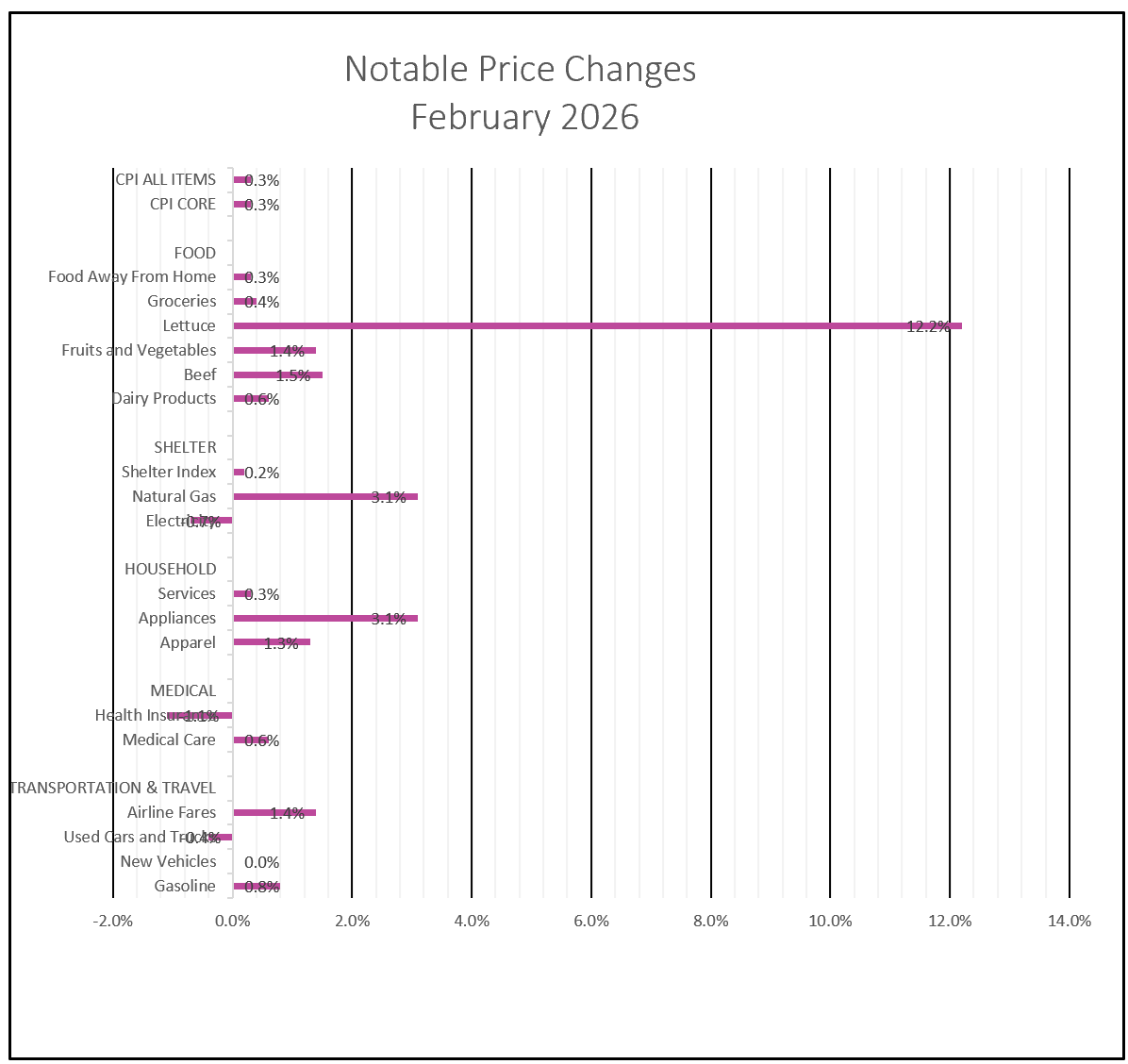
Despite that progress, the all-inclusive CPI ticked slightly higher in February, largely due to energy costs. The energy index rose 0.6% during the month after falling 1.5% in January. However, this increase occurred before a sharp surge in global oil prices triggered by the United States and Israel’s February 28 attack on Iran. Oil prices quickly climbed from roughly $70 to nearly $120 per barrel, and according to AAA, gasoline prices rose to a national average of $3.63 per gallon, up from $2.98 before the conflict. If the conflict proves short-lived, energy prices could retreat and limit the impact on inflation. However, a prolonged disruption—particularly if shipping through the Strait of Hormuz remains constrained—would likely push energy costs higher and ripple through many sectors of the economy.
Prices for several essential household items increased at or above the general inflation rate. Food prices rose 0.4% in February and are up 3.1% over the past year, the largest increase since August. Higher food costs are forcing many families to make difficult budgeting decisions. Economists warn that food prices could rise further if the conflict in the Middle East persists, as higher oil prices increase the cost of fuel, fertilizers, and transportation. Delivery costs may also rise if shipping routes remain disrupted through the Strait of Hormuz, a critical channel that carries about one-fifth of the world’s oil and liquefied natural gas.
Other categories also experienced notable price increases. Clothing prices jumped 1.3% in February, while medical care costs rose 0.5%. The increase in prices for items such as clothing, food, and appliances—many of which are subject to tariffs—suggests that some companies may be beginning to pass tariff-related costs on to consumers.
At the same time, the report included a few encouraging developments. The price of services rose 0.3% in February, down from a 0.4% increase in January. Prices for used cars and car insurance declined during the month, and new car prices were unchanged.
Inflation pressures may also be building earlier in the production pipeline. In a separate report, the Bureau of Labor Statistics reported that the Producer Price Index rose 0.8% in January, the largest monthly increase since July 2025. The PPI tracks the average change over time in prices received by businesses for the goods and services they sell and is often viewed as a leading indicator of future consumer inflation.
Looking ahead, inflation could rise more sharply in March due to the recent surge in energy prices. The headline CPI is likely to increase noticeably as higher gasoline and oil prices filter into consumer costs, while the core CPI—excluding food and energy—may increase more modestly. A significant jump in core inflation would signal that higher energy prices are spreading into other sectors of the economy.
Higher energy costs could also affect economic growth. As gasoline and household energy bills rise, consumers may have less money available to spend on other goods and services. Because consumer spending accounts for roughly two-thirds of the U.S. economy, a sustained increase in energy costs could eventually slow economic activity and affect employment if businesses respond by cutting production.
Meanwhile, the Federal Reserve’s preferred inflation gauge, the Personal Consumption Expenditures Price Index, continues to run above the central bank’s target. According to the Bureau of Economic Analysis, the 12-month PCE price index rose 2.8% in January, while the core measure increased 3.1%. Policymakers are likely to wait for clearer evidence on how the conflict in the Middle East affects inflation before adjusting interest rates. Although lower rates could support the labor market—where payrolls fell by 92,000 in February, and the unemployment rate rose to 4.4%—cutting rates too soon could risk reigniting inflation if energy-driven price increases spread throughout the economy.
Overall, February’s inflation report suggests that underlying price pressures were easing before the recent surge in oil prices. Whether that progress continues will depend largely on how long geopolitical tensions keep energy markets elevated and how broadly those higher costs spread through the economy in the months ahead. Higher Rock will publish its summary and review of the BEA’s Personal Income and Outlays report early next week.