The highlights from the Bureau of Labor Statistics (BLS) Press Release: Consumer Price Index (CPI) – March 2026 are listed below.
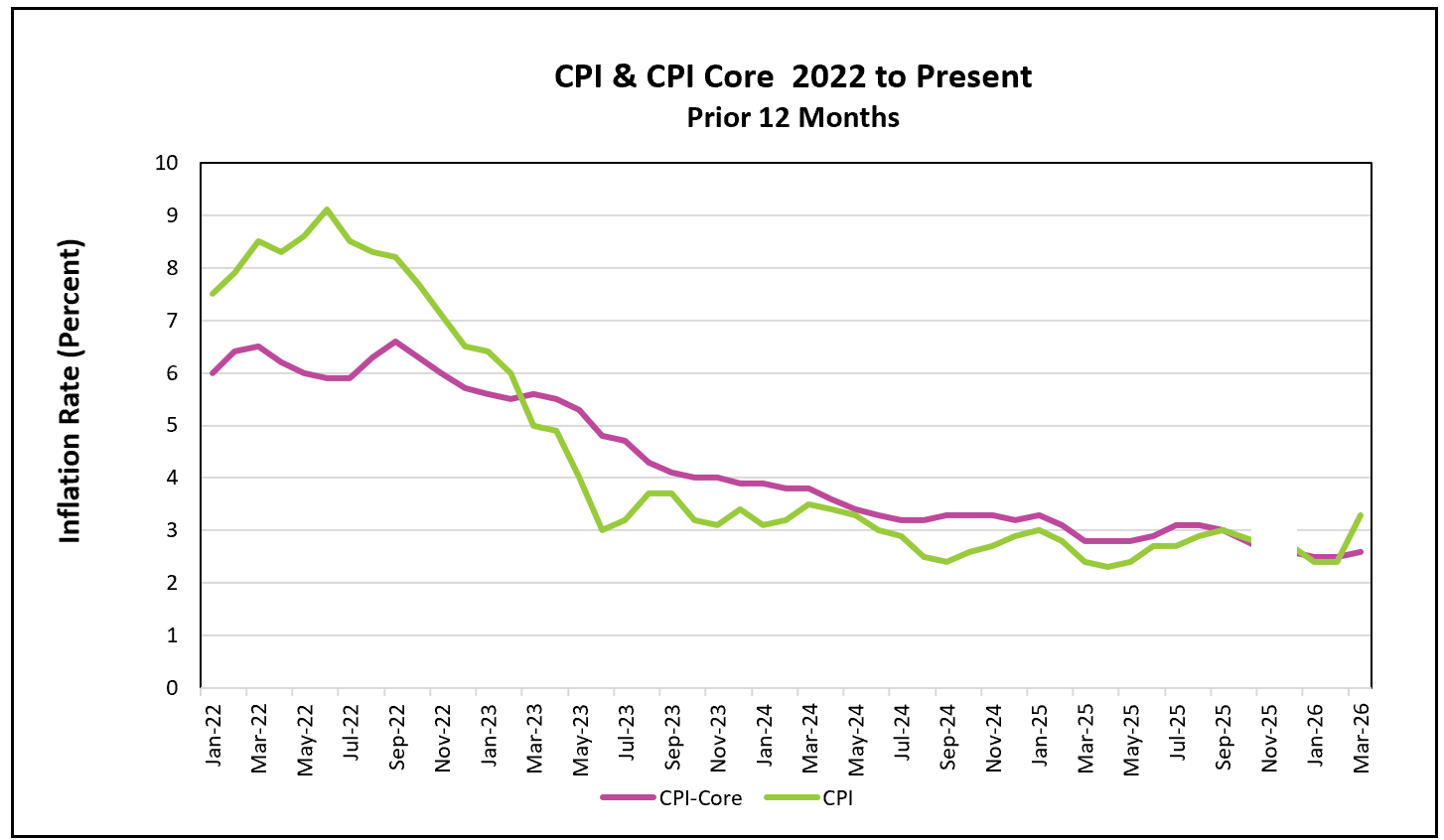
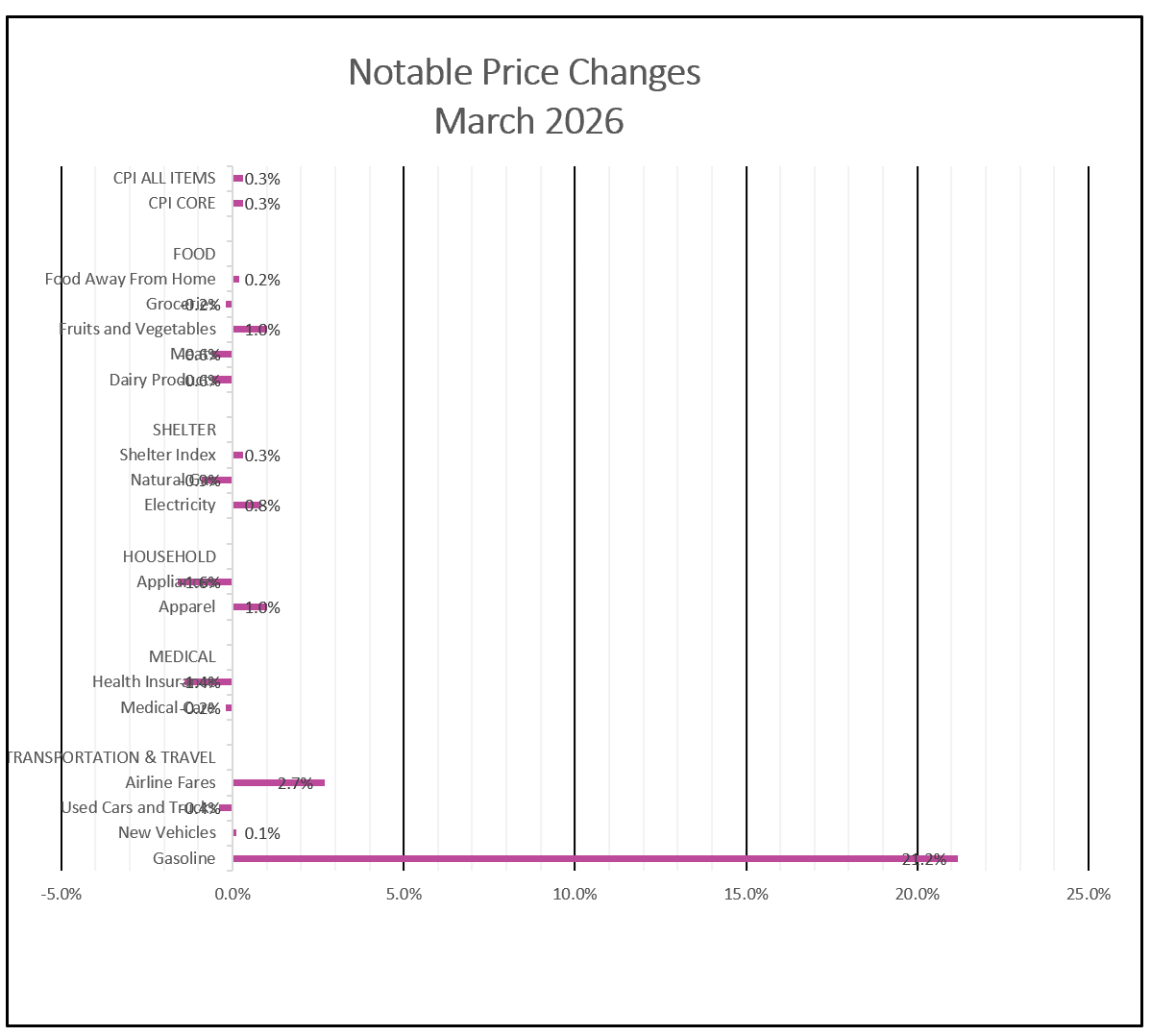
The economic fallout from the war with Iran made itself felt most immediately at the gas pump. Instability in the Gulf region and the closure of the Strait of Hormuz triggered a sharp spike in energy costs, driving March’s CPI to its largest monthly increase in four years. Gasoline prices alone surged 21.2% during the month, accounting for nearly three-quarters of the overall increase—the largest jump since records began in 1967. This marks a dramatic reversal from much of 2025 and early 2026, when falling gas prices had helped keep inflation in check. In fact, prices had declined 5.6% in the 12 months leading up to February, but by March they were nearly 19% higher than a year earlier. As of now, gasoline prices average $4.14 per gallon nationwide, up significantly from $2.98 just before the war began, according to AAA.
Economists are increasingly concerned that this surge in energy prices could have far-reaching consequences. Higher fuel costs raise expenses for businesses across the supply chain—from manufacturing to transportation. In many cases, companies pass these increased costs on to consumers, raising the prices of everyday goods and services. Over time, this dynamic can create a ripple effect throughout the economy, fueling broader inflation. At the same time, higher prices may force consumers to cut back on spending, which could slow economic growth.
At least initially, the spike in energy costs has not fully filtered through to the broader economy. Core inflation—which excludes volatile food and energy prices—was relatively stable in March, with declines in medical care and used car prices helping offset other increases. Households benefited from lower grocery prices, particularly for staples such as meat and dairy products. However, economists caution they may soon rise, given the increased cost of transportation and a recent jump in fertilizer prices—both critical inputs in the food supply chain.
There are early signs that this may be changing. Major delivery providers such as Amazon, FedEx, UPS, and the United States Postal Service have already implemented higher fuel surcharges, indicating that businesses are beginning to pass along rising costs.
Other sectors are beginning to feel the pressure as well. Airline fares rose nearly 2.7% in March, reflecting higher fuel expenses. Apparel prices increased 1.0%, while new vehicle prices edged up 0.5%, as businesses contend with both rising energy costs and ongoing tariff pressures.
Many businesses chose to maintain their prices despite rising tariffs, resulting in reduced profit margins. They were encouraged following a Supreme Court ruling that limited the President’s authority to impose extensive tariffs under the International Emergency Economic Powers Act. However, President Trump replaced those tariffs with a temporary 10% measure under the Trade Act of 1974. Ongoing tariffs and higher energy costs make it increasingly challenging for companies to avoid raising prices.
The surge in energy prices presents a significant challenge for policymakers at the Federal Reserve. While the stability in core inflation offers some reassurance, the risk of a prolonged conflict raises the specter of stagflation—a difficult economic environment characterized by high inflation and slow or negative growth. In such a scenario, households face rising costs even as job opportunities become more limited, eroding purchasing power and confidence. Policymakers are likely to remain cautious. The Federal Reserve is expected to hold steady until there is greater clarity on the duration and scope of the conflict and its economic impact.
Indeed, early signs of consumer stress are already emerging. The University of Michigan’s consumer sentiment index recently fell to its lowest level on record, reflecting growing concerns about inflation and the broader economic outlook. If higher fuel costs continue to squeeze household budgets, consumers may reduce spending on discretionary items, prompting businesses to scale back hiring, which could ultimately tip the economy into recession.
March’s CPI report serves as a stark reminder of how quickly external shocks—particularly those tied to global energy markets—can alter the inflation landscape.
The Bureau of Economic Analysis will release March’s Income and Outlays report on April 30. This report will offer critical insight into how rising energy prices are affecting consumer spending. Higher Rock will provide a detailed analysis shortly after its release.